


Stages of Struggle: Exploring Gender and Mental Health Through Musical Theatre
- bkatherinerose1
- Sep 19, 2025
- 8 min read
Updated: Nov 26, 2025
Trigger Warnings: This essay discusses mental health struggles (including bipolar disorder, depression, grief, and hallucinations), suicide, toxic masculinity, bullying, body image issues, societal pressures, gender norms, internalized sexism, trauma, and substance abuse.


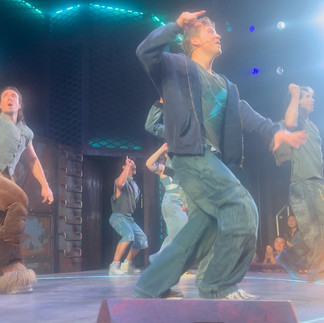


"Theatre is a form of knowledge; it should and can also transform society. Theatre can help us build our future, rather than just waiting for it." (Boal, n.d.) This quote shows theatre's power; it can help explore themes of family, grief, loss, bipolar disorder, and societal norms. In this essay, I will explore how musicals such as "Next to Normal," which examines the impact of mental health on the whole family, and "The Choir of Man," which discusses men's struggle with stigma, and "Kinky Boots," which delves into the ideas of gender conformity and what it means to be a man, show mental health in many ways. Some challenge gender norms and social pressures, while others follow them.
Next to Normal critiques traditional gender roles by showing how both men and women struggle under the idea of social expectations in dealing with their mental health. The focus is on Diana Goodman, a mother who deals with bipolar disorder, depression, and hallucination episodes. Societally, Diana would still be expected to be the caregiver, but in this case, Dan takes on both roles. Dan is the husband of Diana and is a key example of emotional suppression and the stigma surrounding how men should deal with their mental health in silence.
Dan hides his grief throughout the musical, choosing a very emotionless response to everything. This shows Dan's coping mechanism; however, Dan views Diana's mental illness as something that can be fixed instead of being openly sympathetic, which shows that the male expectations to be emotionless can damage them more and cause toxic masculinity. While Dan supported Diana, when she finally does something for her health rather than the family, she leaves, and Dan breaks down and feels abandoned: "I am the one who stayed. I am the one, and you walked away." (Yorkey and Kitt 2008) Dan takes it very hard and as a personal attack until he realizes he needs help to process his grief.
On the one hand, you have Henry, who is sensitive and open to his emotions.
Henry shows much care for Natalie, Diana's daughter; anytime she needs him, he will be there and ready to listen and help her through the hard times. Even when she starts going too far, he is there to pull her out. Diana and Natalie, who both struggle with mental health issues, have different coping mechanisms and different support systems.
Natalie is also the invisible girl, the genius, but that means nothing when her brother Gabe is a constant overshadowing presence. Within the story, we learn that gendered expectations are not followed within the family, as Dan is taking over the role of holding the family together, even though Diana, in her mind, "helps them love each other" (Yorkey and Kitt 2008), when the family is constantly struggling to keep Diana afloat. Dan's suppression affects the whole family because he wants to ignore the bad things in his life. After Diana's ECT, he changes the memories she does not remember.
The music throughout the show is used as a metaphor for the idea of mental state. Hence, when Diana feels used and overlooked by her therapist, he becomes an intimidating rockstar. Likewise, when Diana and Dan are fighting, Dan's tone softens when he admits he is hurting. However, when Diana returns, she is the only one who is ill, the music becomes more rock, and Dan's wall is back up because he now has proof that the internalized stigma is real and men should act okay. When he broke the traditional masculine expectations, no one believed him.
Music is a metaphor any show uses to show how the characters feel. Choir Of Man breaks the masculine expectations and stigmas around men's mental health, just within the show's length of 90 minutes. The idea of a pub with the themes of tenderness, with a group of men openly crying, hugging, and singing through all their worries without hesitation. The vulnerability is out in the open, and they work together through their troubles.
Through an all-male cast in a pub setting, it uses songs and storytelling to subtly challenge traditional masculine norms and the stigma men face for discussing their mental health. This show is a safe space for the audience and cast. The Jungle is a pub that is stereotypically a place for masculine culture. However, this show challenges the toxic masculinity stereotypes of the pub, with this being a space for camaraderie.
This show aims to spread the CALM motto: "Campaign Against Living Miserably" (Campaign Against Living Miserably, 2023). The show is a community of people openly discussing life's struggles. This show is important as it expresses the importance of emotional vulnerability, with how the norm of masculinity has become very much about hiding your issues. Choir of Man is a show that tells people, especially men, it is okay not to be okay. The breaking of stigma is on stage, and with the audience watching. The audience is a community within the show; it is their safe space. Many of the audience members I meet have formed friendships by seeing the show multiple times.
Beneath the glitter and glam of the drag culture, Kinky Boots explores how the rigid ideas of gender expectations can profoundly affect people, with social pressures added, which can turn into internalized sexism and emotional struggles. Lola is a drag queen who challenges the stereotypes of what it means to be a man. This is not just a performance to her but also a political resistance against gender norms and how queer people are still a man or a woman.
This is one of the key points in the show, where Lola challenges a co-worker named Dom about what it takes to be a man and what a woman wants in a man. This starts with people rejecting Lola because Lola is not a real man in their eyes due to the dresses and make-up. However, Lola challenges them differently and confronts them about what it takes to be a real man, and Lola does the same, which makes everyone think about what they classify as a man and what it takes.
Charlie, the owner of the factory, struggles with his mental health and living up to his father's idea of a successful business, while Lola struggles with the trauma from being bullied, and this has a lasting impact. Charlie, growing up, dealt with much toxic masculinity from his dad by having to live up to his legacy, which cost him his mental health. "I am not my father's son" (Fierstein and Lauper 2012) is when they each open up about the pressure and emotions they feel about their families' legacies. Even though these two characters are so different, they both try to heal and have a therapeutic relationship because they both have been victims of the ideas of what a man is, and that creates a new model of masculinity.
These musicals use personal experience, but some are more loosely based than Next To Normal, Choir Of Man, and Kinky Boots. These less personal ones are still important replicas of the genders. Mean Girls has a lot of internalized sexism; one of the most prominent examples is during I Would Rather Be Me when Janis sings, "be nurturing and care, is that fair? Boys get to fight, we have to share" (Fey et al., 2018). This is a feminist powerhouse song. This is just one of the moments when Janis fights the gender norms and is telling the patriarchal structure to let women be themselves and not have to be all ladylike to make sure men feel like they have the power. Janis, also during the musical, is one of the characters who does not bow down to anyone when she feels she is right.
On the other hand, you have Jenna, a waitress, who follows many gender stereotypes such as the ideal of society of a silent woman, suppressed emotions to show femininity, gendered shame, and vulnerability. With the lines of Next To Normal, she is invisible. Her pain is very much overlooked until she has to break through the barriers of femininity and softness. Jenna is also with the idea that other people's happiness should be put first.
Female suffering is explored in the show Jagged Little Pill, and it takes a deep dive into how females have societal pressure to appear perfect to the world. Mary Jane suffers a lot with social expectations and represses a lot, which eventually causes a breakdown from the internal pain. Both female leads suffer in silence about their trauma and are never able to voice it out loud. In this show, Frankie’s daughter dares to go against gender norms by fighting back.
Dear Evan Hansen also dives into the social pressures of being a high school student dealing with mental health, and how Evan acts as if he is the only one who suffers and dismisses his mom, other family, and friends. Evan uses this as a defense mechanism, which is leading him to follow the lines of toxic masculinity. This is explored in the opening number, where Evan's isolation from the world is expressed. The opening number "Waving Through A Window" (Levenson, Pasek, & Paul, 2017) can be interpreted in many different ways, but all convey the dread Evan feels with his loneliness. To Evan, it could mean that socially online, he is just another face scrolling through people's photos, and no one even notices. It could also be a literal window where he waves at passersby, but still no one looks at him. Jeremy Heere is very much the quiet, invisible character like Evan, but he becomes popular in a more unnatural way.
Dear Evan Hansen also explores the fact that both Diana and Evan hallucinate this idea of a person. In Diana's case, it is her perfect son; in Evan's case, it is a friend he never had.
Being an outcast is one of the main reasons for Evan's struggles. Another musical that explores the difficulties of high school and fitting in is The Lightning Thief: The Percy Jackson Musical. Percy is a “good kid” with ADHD and dyslexia who tries his best, but it is never enough. He is expected to constantly be strong, which reflects the toxic masculinity that teaches boys to hide their struggles growing up. Percy’s cry for help comes in the song “Good Kid,” where he pleads to be seen as more than the troublemaker people have labeled him. This highlights the toll that stigma and misunderstanding can take on his mental health. Similarly, Annabeth — the clever and capable daughter of Athena sings “My Grand Plan,” where she expresses her frustration at being underestimated and denied second chances, unlike her male peers. Both characters face challenges at home, with stepparents who dismiss or dislike them, but together they find support and learn to face their struggles.
Rocky Horror is another musical that pushes the idea of societal norms out the window; every aspect pushes the boundaries.
The ideas of gender identity are explored through Everybody’s Talking About Jamie, with Jamie knowing he loves things classed as feminine, yet loving them anyway. Jamie has trauma from his dad and being bullied at his school for simply being gay, yet Jamie lets the drag be his empowerment. In contrast to Kinky Boots, Jamie uses drag to be who he wants to be, while Lola uses drag to assert who she knows she is. Jamie's empowerment is personal and breaks the internalized stigma, while Lola is a personal activist against the idea of masculinity being one thing. Many musicals push the boundaries. "Hairspray" challenges the social norms of weight and American beauty standards while also pushing back against racism. Then you have "Hedwig" exploring the idea of self-identity and the struggles people can face.Musicals do not just portray struggles; they also get the audience to think and look at themselves and empathize with people around them, maybe even get them to shift their cultural expectations, and this is what Boal's statement was making: that theatre is knowledge about yourself and others.
Boal, A. (n.d.) Theatre of the Oppressed. [Quote referenced].
Campaign Against Living Miserably (2023) About CALM. Available at: https://www.thecalmzone.net/ (Accessed: 16 September 2025).
Fey, T., Benjamin, J., Richmond, N. & Richmond, J. (2018) Mean Girls: The Musical. Music Theatre International.
Fierstein, H. & Lauper, C. (2012) Kinky Boots. Broadway Licensing.
Levenson, S., Pasek, B. & Paul, J. (2017) Dear Evan Hansen. Music Theatre International.
Yorkey, B. & Kitt, T. (2008) Next to Normal. Music Theatre International.
Comments